David Beede's
"Eedy Beede" octave dulcimers... |
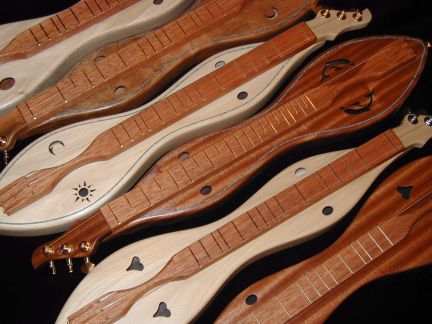  |
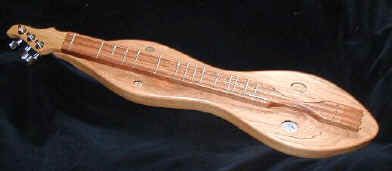
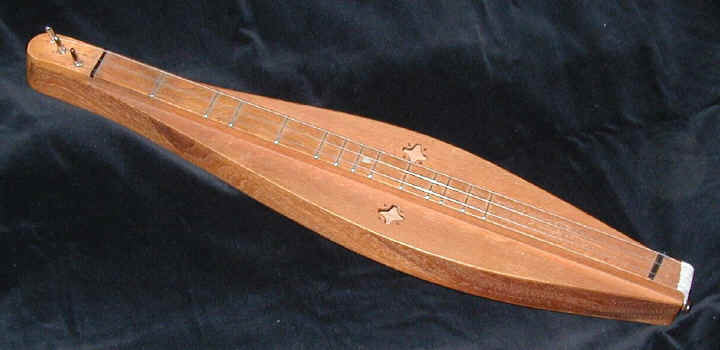
| My "classic model" has a poplar body, all oval sound holes and 3 string mahogany "standard fretted" fingerboard [includes 6 1/2 fret] and sells for $345. Additional features can be seen in the pricing info below. |
Approximately 24" long, 5" wide and 2" deep, they have 1.25" wide fingerboards, 16.5" strings lengths, tuned in DAD an octave above full sized dulcimers. They can also be tuned as low as AEA with satisfactory results. |
| This is my first octave dulcimer I made in the '70s out of left overs from a full sized instrument. It had zither pegs and a longer string length so was tuned AEA. |
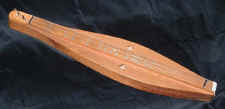 Whenever I'd play it folks would ask about it... Whenever I'd play it folks would ask about it...
|
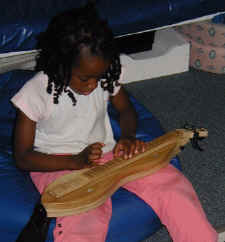 |
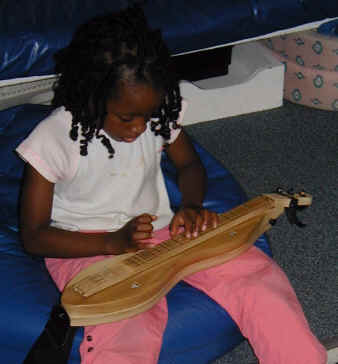
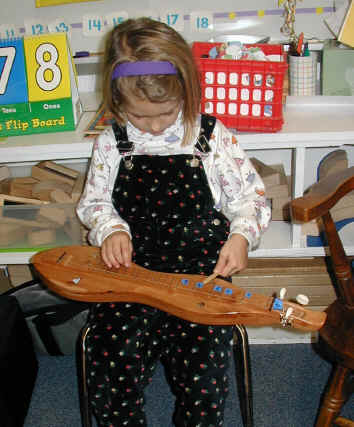
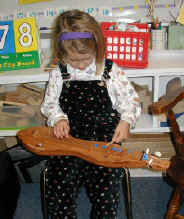
My wife Julie Johnson has taught kindergarten for 15 years so there have been many opportunities to test these with little hands. |
 |
|
|
Though child inspired these are very capable instruments that hold their own in a variety of musical settings. Whether you're showing dulcimer fundamentals to little fingers, or floating a high harmony into a dulcimer jam or adding authoritative chop chords in a mixed jam session, these instruments really shine. |
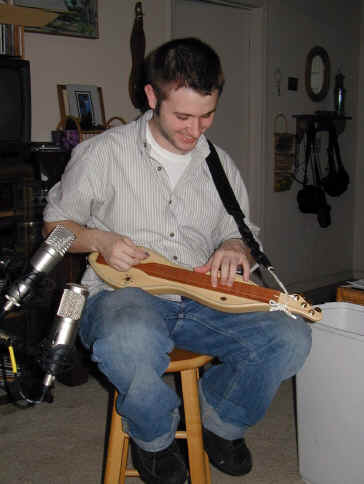
| I had the great pleasure of participating in a jam at the Hudson Valley folk festival in Beacon NY. Though hard to see here, I'm playing an octave dulci along with two guitars, a banjo, and a djembe African drum. Most mountain dulcimers would be functionally silent in this kind of group.

|
 |
|
After months of research and experimentation - 27 prototypes - and hours of playing and listening this design finally emerged. |
 |
|
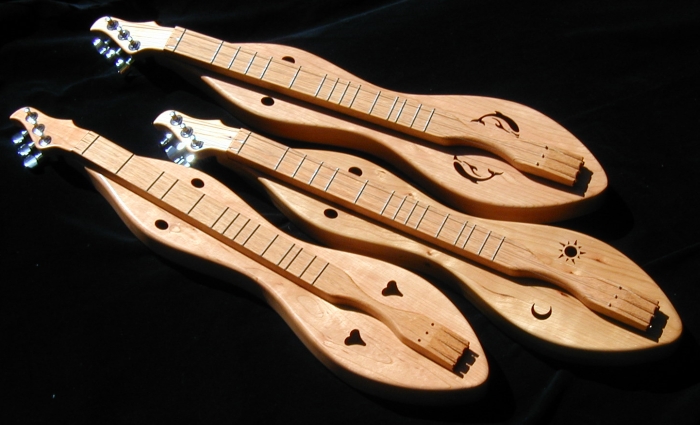
Other sound hole designs are available. |
|
|
|
|

|
Close-up of turquoise "loop" perfling. |
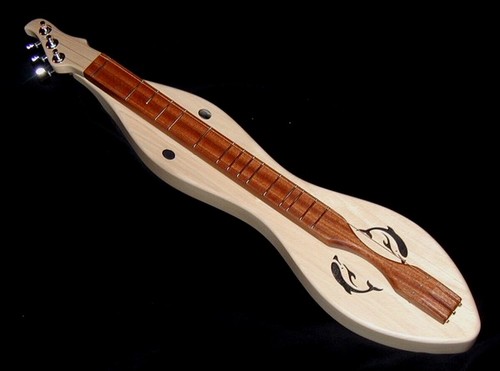
| Here's my "Floridian" model with Atlantic white sided dolphins for sound holes. |
|
|
|
|
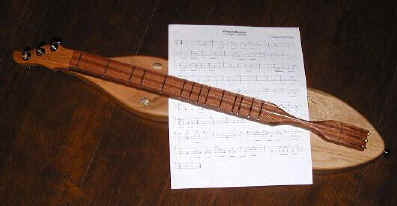
The "floating fingerboard" allows a wider surface of soundboard to be activated - and as a side benefit you can use it to hold TAB while you're learning a tune. |
 |
|
|
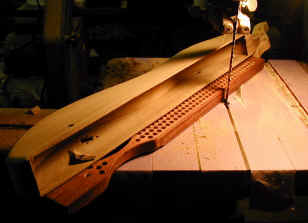
Though rather tradition looking on the outside - the inside reveals some pretty advanced features to insure good sound and playability.
A honeycomb pattern of holes lightens the floating fingerboard, while maintaining its rigidity. The lighter the fingerboard the less effort is required for the top to move, which means more sound.
A "V" brace helps transfer vibration from fingerboard to top. |
|
You think
someone loves her EDBD...??
|

|
 Whenever I'd play it folks would ask about it...